





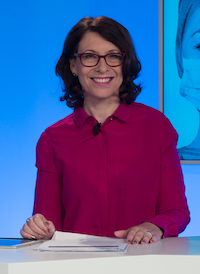
Claire Doole is a former BBC correspondent and international spokeswoman who is passionate about helping people communicate with confidence. Since 2006, she has successfully trained hundreds of professionals in the art of presenting and public speaking, talking to the media, managing communications in a crisis, and writing for the web. In addition, she has coached C-level executives and public figures to give powerful TEDx and TED style talks in Europe and the Middle East. A Swiss and UK national, Claire trains and coaches in French and English.
Claire is also a highly experienced moderator having facilitated panel discussions with government ministers, NGO activists, humanitarians and human rights specialists at major events.
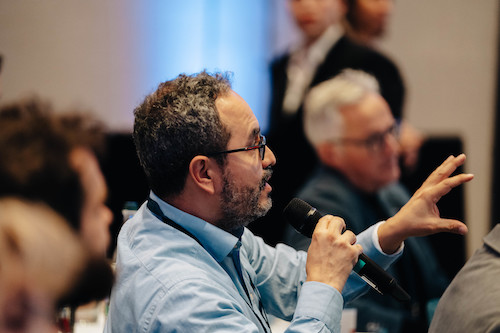
- Reframe convoluted questions: If a question is overly long, vague, or hard to follow, help your audience by tightening it up.
“I am sorry I can’t quite grasp every detail of your question, but I would like to respond to your part about X” - Be clear when you don’t know the answer: You can’t have all the answers. Here are three options on what to say when you don’t have the answer:
i. Say ‘I don’t know’ – you’ll get back to them. Never, ever, guess.
ii. Ask someone in the audience to respond who is an expert on the subject.
iii. ‘I’m not 100% sure’ When you say this you’re not saying ‘I don’t know’, you’re saying ‘I’m not completely sure’, which is a totally different thing. - Answering challenging questions: When faced with a challenging question from that angry staff member, board member or at an official hearing – you need to employ the ABC technique I teach in media training - acknowledge the question, potentially reframing it before you bridge to a broader point you want to make – moving from the specific to the general.

- Online events: Questions pour in via the chat, leaving the presenter frantically scrolling up and down to find the pertinent questions.
- External events or conferences: When audience members seize the opportunity to talk about their organization or experience, rather than ask a question to the presenter. (As a panel moderator, a comment rather than a question from audiences is an occupational hazard!).
- Town halls: When the presenter/speaker is faced with a challenging staff member, keen to ask that killer question.
- Formal meetings or hearings: The presenter is required to answer many questions in a fixed amount of time, often from members who ask multiple questions on a wide variety of subjects.


By Claire Doole, www.doolecommunications.com
Pitching to an executive board is high-stakes. After months of hard work developing a project or strategy, you need the board’s buy-in—but securing it is no easy feat.
The room is filled with senior executives who are busy, and their knowledge of your subject might vary widely. Adding to the challenge, there may be up to nine members present—an odd number to avoid voting ties.
I’ve coached many professionals to navigate these make-or-break moments. So, what’s the secret to winning over the board?
Below are some tips and tricks that could help you get the thumbs up for your next pitch.
Preparation prevents poor performance
Advance notice is critical. Boards don’t like surprises. It pays off to informally speak with each member beforehand so that you can write a concept note that you can get signed off.
Make sure you send a PDF of your slides to the board a few days before the pitch so they have time to read it. This means they can absorb the main arguments and prepare some pertinent questions.
- How to give a talk that engages the audience
- What makes a great interviewer?
- Tips from a Masterful Media Communicator
- Keeping the show on the road
- Event Organisers, Heed Your Moderator's Counsel
- What makes a great keynote speech?
- Power of the Editorial Sense
- Is Chat GPT Valuable for Public Relations Professionals?
- The Unexpected Panel
- What makes a great Master of Ceremonies?
- SEE, STOP, SAY: How to deliver a speech that captivates
- When do you cancel a panel discussion?
- Speechwriting - How to capture your speaker's voice
- Know Your Audience – the Key to Successful Speeches and Presentations
- 10 top tips for nailing that job interview
- The forgotten panel participant - the audience
- Lessons from the pandemic on how to communicate science
- Media Training: How to Answer the Personal Question
- Wolfgang – the master storyteller
- Demystifying the art of storytelling
- Has there been an event reset since COVID?
- Setting up and running hybrid meetings
- Advice from a moderator on how to select your panel speakers
- Press briefings in the virtual world
- How to professionally produce a virtual event
- Hybrid events the new normal in 2021
- Moderating in the virtual world - Tips and techniques from a professional moderator
- Engaging Presenting in the virtual world
- Successful virtual events are good television
- Facilitating engaging meetings in the virtual world
- The power of virtual learning particularly in a pandemic
- 10 Tips for Moderating Dynamic Virtual Meetings
- Unprecedented pandemic press conference from pharma industry
- Storytelling is an essential professional skill
- Creating a STAR panel discussion
- An end to "Manels" and "Manferences" - a Moderator's View
- Helena Rubenstein - Opportunity missed to tell the story of a great woman
- How to make your point the right way
- How to succeed at a video job interview
- Storytelling to further your career
- A job interview is a presentation
- Avoiding Oscar Night Gaffes
- Is Davos the gold standard of panel discussions?
- You Too Can Be A Powerful (TEDx) Public Speaker
- What Makes a Powerful TED Talk?
- Building Rapport for Effective Communication
- Handling Question and Answer Sessions
- How to construct a memorable speech
- Motivational speeches: Take a lesson from football
- 6 top tips for an engaging panel discussion
- How to craft a memorable sound bite
- Saving Swiss Public Service Broadcasting: Tips on structuring a persuasive speech
- Moderating with a Cartoonist
- Technology can transform your conference
- Moderator, Facilitator and Master of Ceremonies: What is the Difference?
- Lessons from a Master Coach: What I learnt about public speaking from a musical maestro
- "Answer, don't avoid the question Prime Minister"
- The Local Media: Friend or Foe? How to constructively engage with local journalists
- How to moderate a hot topic
- How to sound natural when reading a speech
- The inaugural speech of Donald Trump: How persuasive was it?
- Moderating with Macron
Page 2 of 15


Latest news


- 1
- 2
- 3
- 4
- 5
- 6
- 7
- 8