



Guest Blogs
Knowitall.ch often invites local experts in their field to contribute to their own blogs on our site. This means not only you will benefit from the useful recommendations that we make on our News pages, but you can also profit from some of the great advice and tips that these experts have to make on their favorite subjects. Whilst each of these bloggers has been recommended to us at some point during the evolution of Know-it-all passport and knowitall.ch, obviously we are not able to test out all the suggestions they make on their blogs, nor do we necessarily agree with all their opinions. So if you do find one of their tips useful (or not!), do let us know!
To make these blogs more accessible to you, we have now decided to group them altogether in one section, entitled Guest Blogs, accessible from our main menu bar. We will also post the most recent blogs on the home page of our site in the right hand column.
We are still building up this area of the site, and are looking for bloggers in a number of sections, including Your Home, Travel, and Leisure, so if you feel you have a useful contribution to make in either of these areas, and have the time to submit blog entries approximately every month, then please get in touch!
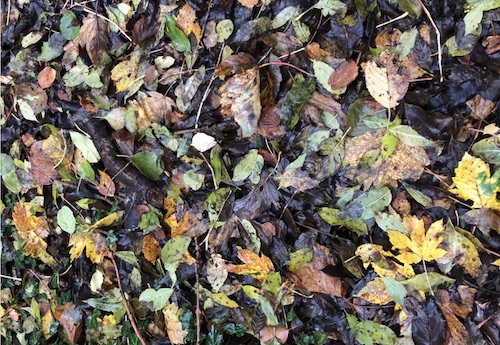
By Tara Lissner, Swiss Gardening School
November brings damp and short days with still lots to do in the garden.
So many colours underfoot while out walking in the woods, a tapestry of tree life, wet and soggy from the downpours and the air fragrant with the scent of damp and decaying leaves - autumn has truly arrived.
My garden is so wet that I'm discouraged from doing too much at the moment, the fact that there has been so much rain does not encourage me and when the dog goes to the door, has a little sniff and turns back into the house I know its not good. But as my list of jobs is increasing by the day, out I go! Read more from the blog here
What's on
This is the season of Sunday openings and special events along with pretty seasonal markets, here are some you may find interesting.
Vernissage de l'Avent, Rémy Jaggi, route de Grens 1, Trélex, Saturday 9 & Sunday 10 November, 16:00-21:00
One of the most beautiful holiday displays will take place this weekend at this innovative florist and nursery in Trélex.
Rémy Jaggi
Château des Bois, Marché de Noël, Chemin de la Combe d'Onex 10, Satigny, Saturday 16 & Sunday 17 November
A magical market filled with seasonal joy.
Château des Bois
Green Christmas Eco Marché, Centre sportif de Founex, route de la Chataigneraie, Thursday 21 & Friday 22 November, 10:00-19:00
The fourth edition of this green market brings together a group of small entrepreneurs with their eye on sustainability. My swiss garden will be present with winter containers filled with seasonal plants and spring bulbs.

By Anna Lascols, Organizing Geneva
Did you know that every hour, 10 billion emails are being sent around the world? Yes, life has become so much easier and faster with the internet, email and cloud services, online communication and bill paying. We have less paper flying around, can research documents by typing their name in the search bar of our computer, find all the information we need on google and store as many files as we want. Everything is virtual, or in other words not physically existing and hence causing no clutter or damage to the planet.
Wait a minute, is that true?
Let’s check some facts on the carbon footprint of those 10 billion emails. What if I told you that every email runs on average through 15,000 km of cables to arrive at destination? That an email with a 1 MB attachment consumes as much as a 25W light bulb during one hour? That data centers in Switzerland consume as much electricity as the canton of Neuchâtel? That 78% of all incoming mails are spams that cause around 20 million tons of CO2 every year? And the list goes on. In reality, the online world has a huge carbon footprint and we contribute to it every time we send an email, store a document or research information.
And not only that. We believe that emails and computer desktops banish all the admin and paper clutter. Yet in reality, we can feel as much overwhelmed by online than by offline or physical clutter. We can’t touch it, but we can see the apps and folders piling up, we lose control over our filing systems, lose time looking for information or retrieve passwords, keep offline duplicates of online invoices to be safe, feel puzzled with the new time saving apps being promoted and are spammed by useless newsletters. We spend much more time on our emails and computer admin as we think, if you don’t believe me keep a time log!
Here a couple of online organizing and energy saving tips:

By Claire Doole, Claire Doole Communications
I vividly remember getting criticised on Twitter for moderating two "manels" - all male panels - during a half-day event at the European Parliament in Brussels some years ago. It would have been a "manference" - a conference where only men speak - if the organisers hadn't remembered to invite one woman to give a presentation.
The organisation, EU Panel Watch, was right to criticise. I should have refused to moderate the all male panels. Unfortunately, moderators rarely get a say in the selection of speakers. I now advise clients on how to design panels and conferences, which are diverse, balanced and engaging - these are the principles I applied when editing BBC radio and TV news programmes.
Still EU Panel Watch's latest annual report on women's representation and speaker diversity on policy panels in Brussels shows change is slow and much more effort is required.
In 2018, out of 1583 speakers at conferences the organisation monitored in the "Brussels bubble", only around one third were women - this held true for panels and keynote speeches. Shockingly, 26% of panels were all men and three quarters of them also had a male moderator. At these rates, EU Panel Watch estimates we can expect to see gender parity in 80 years!
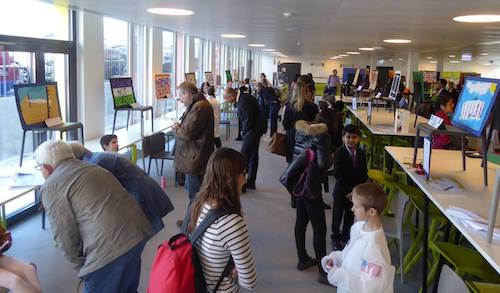
By Mark O'Brien, La Côte International School
The International Primary Curriculum, commonly known as IPC, is a comprehensive, thematic and creative curriculum with specific learning goals for every subject. What makes the IPC stand out from other curricula is the strong focus on developing students as global citizens and becoming internationally-minded. International learning goals are unique to the curriculum and help students to develop an increasingly sophisticated national, international and intercultural perspective. IPC is now taught to over 1,000 students across 90 countries around the world, with many opportunities for students and teachers to share their experiences and learning.
The IPC has been designed to ensure rigorous learning, whilst providing both students and teachers learning opportunities that are exciting, meaningful and active. Through the IPC, the following subjects are covered:
- Geography
- History
- Science
- Art
- Technology
- Computing
- Physical Education
- Music
- Society
- International Learning
The curriculum is split into 3 Mileposts:

By Dr Michelle Wright, HealthFirst
In Europe, around half of us will experience mental distress at some point in our lives, with depression and anxiety the most common diagnoses. But despite being so common, talking about mental health remains taboo and there is still a lot of misunderstanding, uncertainty, fear and stigmatization surrounding it.
Many people are not well informed about how to recognize mental health problems, how to respond to an affected person, or about the treatments available. In addition, because of worries about being perceived as weak, taking the step to open up to others about their own mental health isn’t always easy for someone.
To try to tackle these issues, the Pro Mente Sana Foundation, with support from the Beisheim Foundation, has recently launched the internationally recognized Mental Health First Aid program in Switzerland. Here it’s called ‘ensa Mental Health First Aid’, ‘ensa’ meaning ‘answer’ in one of the Aboriginal languages and being translatable in German, French, Italian and English. HealthFirst is proud to be recognized as an ensa Partner, providing certified ensa Mental Health First Aid courses in English throughout the country.
The program, originally developed in Australia, trains and empowers lay people to provide initial support to others who may be developing mental health problems, experiencing worsening of existing mental health problems, or who may be experiencing a mental health crisis. It’s essentially a First Aid training programme with similar principles to those for physical First Aid but this time for mental health.
Any interested person who wants to learn how they can support family members, friends or colleagues experiencing mental health difficulties can become a Mental Health First Aider. No healthcare background or pre-requisite training is necessary.
- Harvest time in a Swiss Garden
- Choose joy. What a phrase! A concept! A revolution even!
- Helena Rubenstein - Opportunity missed to tell the story of a great woman
- Back to school – time to relax!
- How to make your point the right way
- Is your child active enough?
- How to succeed at a video job interview
- Kids and Zero Waste
- Storytelling to further your career
- Reluctant players – does your child really want to play football?
- A job interview is a presentation
- The Perfect Career for Trailing Spouses?
- Avoiding Oscar Night Gaffes
- 8 solutions for solving teacher-related problems
- The month of March is full of surprises
- Is Davos the gold standard of panel discussions?
- Search Inside Yourself: born at Google and based on neuroscience
- How to be an outstanding children’s football coach
- Information about the A-Level Diploma
- Time in the market, not timing the market
- Does My Child Have a Speech or Language Delay?
- You Too Can Be A Powerful (TEDx) Public Speaker
- What Makes a Powerful TED Talk?
- Renovating in Geneva: a 19th century home gets a 21st century heating system
- Sunita meets one of the authors of "The Joy of Leadership"
- Building Rapport for Effective Communication
- New beginnings
- Set your internal clock for a great winter season
- Benefits of Next Generation Passive Investment Strategies
- Sunita talks to plant-based Chef Anou Boccasam
- Handling Question and Answer Sessions
- Travel as an attitude
- The science of eating fruit
- How to construct a memorable speech
- QUICK organizing tips for each room of your house
- Motivational speeches: Take a lesson from football
- Children with sensory issues: How to make summer outings fun
- Sunita talks to yoga teacher, Céline Le Roux Schaer
- How to enjoy a healthy BBQ season!
- 6 top tips for an engaging panel discussion
- Looking for an honest espresso
- How Women Rise: Break The 12 Habits Holding You Back From Your Next Raise, Promotion Or Job
- The end of 30's life crisis
- Getting ready for summer
- An interview with Anne-Marie Struijk, Founder of La Maison de Tara
- Are you summer?
- How to craft a memorable sound bite
- Considering a home or office renovation? 10 must-haves for finding the ideal project manager
- The A-Level Diploma
- Spring clean your body!
- A time of optimism
- Delivering powerful presentations
- Saving Swiss Public Service Broadcasting: Tips on structuring a persuasive speech
- An interview with Peter Wharton
- How to be prepared for market volatility – the importance of risk profiling explained
- Confidence: a different approach
- How to reach your peak - an interview with Anders Ericsson
- Moderating with a Cartoonist
- Technology can transform your conference
- Family-friendly Bonfire Night 2017 fireworks shows
- The gentle arrival of Autumn
- Hotel-Restaurant Valrose in Rougemont, Vaud - an interview with John Grohe
- Getting connected with current trends can be stimulating
- Alpine weather forecast
- Moderator, Facilitator and Master of Ceremonies: What is the Difference?
- Ouch, rejection
- Energising events and tips for autumn
- Are you organized?
- Happiness
- Mindfulness at school: a luxury or a necessity?
- “Pain is the agent of change,” Grief Works: Stories of Life, Death and Surviving
- Lucy’s story
- Women and retirement – prepare in advance and be independent – just in case!
- Lessons from a Master Coach: What I learnt about public speaking from a musical maestro
- Our final trip to Glacier 3000
- Sunita Sehmi talks to gender and inclusion specialist, Fleur Heyworth
- The Alpine Property Market June 2017
- "Answer, don't avoid the question Prime Minister"
- Sunita Sehmi: interviewer and interviewee
- Difference between a Babysitter, Aupair and Nanny in Switzerland
- John Tomlinson talks to Sunita Sehmi about Trainer Tools, a collaborative podcast project for trainers
- The Local Media: Friend or Foe? How to constructively engage with local journalists
- Grief ain’t linear and other things I learned from the end of my marriage
- Taking the stress out of exams
- Why are friends an important part of your support system?
- Champion of women, food guru, inspirational entrepreneur: Pinky Lilani, the Ultimate Spice Girl
- Top 5 tips for expectant parents
- How to moderate a hot topic
- Eco building in the Alps
- Many Expats unaware their UK pensions have been affected
- Sharing happiness with Frederik Van Lierde, founder of Gift Voucher Kiosk
- How to sound natural when reading a speech
- Cultivating Connection
- Travel: Port de Pollença, Mallorca
- The Entrepreneur's Wife: A Survival Guide
- Raising Global and Mobile Kids
- Letting Go - How to make forgiveness a habit to give your life a boost
- The inaugural speech of Donald Trump: How persuasive was it?
- Happiness
- Last Christmas I gave you my heart…Saas-Fee
Page 27 of 72