


Guest Blogs
Knowitall.ch often invites local experts in their field to contribute to their own blogs on our site. This means not only you will benefit from the useful recommendations that we make on our News pages, but you can also profit from some of the great advice and tips that these experts have to make on their favorite subjects. Whilst each of these bloggers has been recommended to us at some point during the evolution of Know-it-all passport and knowitall.ch, obviously we are not able to test out all the suggestions they make on their blogs, nor do we necessarily agree with all their opinions. So if you do find one of their tips useful (or not!), do let us know!
To make these blogs more accessible to you, we have now decided to group them altogether in one section, entitled Guest Blogs, accessible from our main menu bar. We will also post the most recent blogs on the home page of our site in the right hand column.
We are still building up this area of the site, and are looking for bloggers in a number of sections, including Your Home, Travel, and Leisure, so if you feel you have a useful contribution to make in either of these areas, and have the time to submit blog entries approximately every month, then please get in touch!
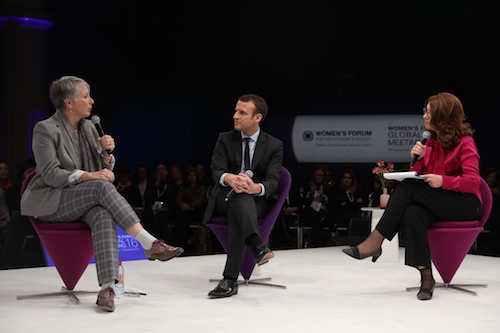
French presidential candidate Emmanuel Macron, Canadian Minister for the Status of Women, Patty Hajdu, Claire Doole
By Claire Doole, Claire Doole Communications
How many of you attended this year’s gathering of the global elites at the World Economic Forum? If you were there, did you sit through any of the panel sessions? With the good and the great vying to be in the audience and on the podium, Davos panels are a hot, if pricey, event.
But how good are these sessions? Are they engaging, informative and thought provoking?
Many a client has contacted me as a moderator saying they want a Davos-style panel discussion. In the conference/event industry, these panels with their star-studded line-up are obviously seen as the gold standard.
So, I decided to test this hypothesis and watch a panel in which Rutger Bregman, a Dutch historian, made headlines with his remarks about why no one at Davos was talking about the super rich avoiding paying taxes.
By Sunita Sehmi, Walk The Talk
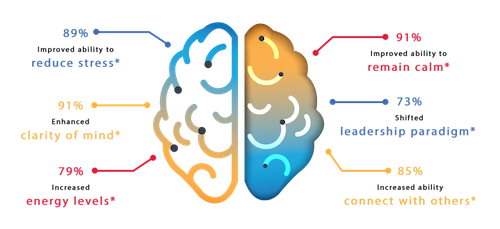
Can you imagine what it's like to be able to completely clear your mind and experience a deep sense of calm whenever you want? What about the power to switch into a state of intense concentration, but at the same time be completely relaxed?
Developed at Google and based on the latest in neuroscience research, the Search Inside Yourself (SIY) Certified Program teaches attention and mindfulness training that build the core emotional intelligence skills needed for effective leadership. This results-oriented program is designed to empower individuals, strengthen teams and transform entire workplaces. This course is coming to Geneva and my interview is with both SIY certified teachers Angelika von der Assen and Robert Chender who will co run the two day workshop. Enjoy!
1. What is SIY about?
The Search Inside Yourself (SIY) program was originally developed at Google end 2007 as an in-house mindfulness and emotional intelligence training for employees. Due to great demand, starting in 2012 it was offered to other companies and to the public through the Search Inside Yourself Leadership Institute, a non-profit organization. SIY takes a science-based approach that combines neuroscience, mindfulness and emotional intelligence. Through these three disciplines, SIY helps participants integrate the key building blocks for well-being, collaboration, and leadership. The program is highly interactive. It is approximately one- third content and two-thirds experiential exercises, including one-on-one and group conversations, attention-training practices, listening exercises, and writing activities. Each program is tailored for the client’s needs and presented through a different lens depending on the audience, while maintaining the combination of neuroscience, mindfulness, and emotional intelligence that has made the program successful.
2. Do you need to have any previous training in mindfulness to do the course?
No, this is not at all necessary. All that is necessary is an interest.

Buddy, a veteran InterSoccer coach
By Steve Long, InterSoccer
What does it take to make a good children’s football coach?
Gone are the days when trainers used to think it was a good idea to focus only on the children with an obvious talent, and ignore the less natural or confident players.
Now it is accepted that a coach’s job is to ensure that every child has the opportunity to grow their skills in a supportive and encouraging environment, thereby developing into confident and well-rounded young adults, whether or not they choose to play sports beyond grassroots level.
So what does it mean to coach Generation Z?
And how can you make sure you succeed as an outstanding coach? For many people their first experience of coaching is during adolescence, helping out at their local football club or grassroots organisation where they learned to play themselves.
However, just because you know how to play football, doesn’t mean you already have the soft skills needed to teach it.
If you are just starting out, whether as a teenager or perhaps as a parent helping at your child’s school, follow these principles of coaching and you can’t go wrong.
1. Know your football. Almost as soon as they start learning to play – and sometimes beforehand– many children love to watch live matches on television with their families. Help them to learn the rules of the game by discussing what they saw next time you meet them.
2. It goes without saying that to teach football, you have to play well. If you are no longer in a team, sharpen up any rusty skills by joining a friendly five-a-side and try to remember what it felt like to believe that one day you could end up playing for your country.
3. Have the patience to teach techniques from scratch. Good teaching is being able to explain something you have done thousands of times, at the right pace for someone who has completely fresh eyes and probably needs several attempts to understand the concept.

By Sabine Hutcheson, Head of Sixth Form, British School of Geneva
In a region where we are spoilt for choice in post-secondary education, A-Levels stand out as the true alternative. Recognised as a ticket to universities internationally, the A-Levels programme is very different to other diplomas in its structure and in the way it prepares students for higher education.
Structure and ethos of the diploma
Students taking A-Levels are typically 16 to 18 years of age and the programme is two years long. In the UK, this stage of education is referred to as the Sixth Form. It immediately follows the General Certificate of Secondary Education (GCSE) in the UK, obtained at the age of 16 and marking the end of compulsory education.
In the first year (Year 12), students study 4 subjects for which they are examined in May and June of that academic year. In their second and final year (Year 13), students tend to drop a subject and pursue the 3 with which they feel most comfortable and/or which better fit their chosen university course admission criteria. Some students choose to maintain all 4 subjects to add to the challenge or to keep their options open. A subject taken in Year 12 only will be validated as an AS Level (Advanced Subsidiary Level) and may count towards university applications.

By Robert Harris, Forth Capital
Nobody can time the markets consistently. It is time spent IN the market, rather than trying to time the market, that is the key to medium to long-term investment growth. If you want to be invested in equities you must be prepared to understand that a market cycle is usually five to seven years, and if you can’t be invested for that length of time, you should not be invested in equities.
For example, if you had been invested in a UK index fund from 1980-2009, you should have achieved a return of 700% on your investment. However, if you missed the best 20 days of stock market performance during that period, that return would have been reduced to just 240%.
The lesson for all investors here is that as long as you are invested in your correct risk strategy, and for the medium to long term, you should stay invested and “ride the wave”.
If we look at the events of the last 3 months, most stock market performance has been driven by statements from the Chairman of the Federal Reserve, Powell, whose statements have signalled changes in US interest rates from increases of 0.5% to reductions of 0.25%, causing markets to fall and rise depending on the statement.
Another example of when staying invested has proven to be the best route, is the performance of Forth Capital’s Next Generation funds which continue to rebound after the general market shock in the 4th quarter of 2018.
- Does My Child Have a Speech or Language Delay?
- You Too Can Be A Powerful (TEDx) Public Speaker
- What Makes a Powerful TED Talk?
- Renovating in Geneva: a 19th century home gets a 21st century heating system
- Sunita meets one of the authors of "The Joy of Leadership"
- Building Rapport for Effective Communication
- New beginnings
- Set your internal clock for a great winter season
- Benefits of Next Generation Passive Investment Strategies
- Sunita talks to plant-based Chef Anou Boccasam
- Handling Question and Answer Sessions
- Travel as an attitude
- The science of eating fruit
- How to construct a memorable speech
- QUICK organizing tips for each room of your house
- Motivational speeches: Take a lesson from football
- Children with sensory issues: How to make summer outings fun
- Sunita talks to yoga teacher, Céline Le Roux Schaer
- How to enjoy a healthy BBQ season!
- 6 top tips for an engaging panel discussion
- Looking for an honest espresso
- How Women Rise: Break The 12 Habits Holding You Back From Your Next Raise, Promotion Or Job
- The end of 30's life crisis
- Getting ready for summer
- An interview with Anne-Marie Struijk, Founder of La Maison de Tara
- Are you summer?
- How to craft a memorable sound bite
- Considering a home or office renovation? 10 must-haves for finding the ideal project manager
- The A-Level Diploma
- Spring clean your body!
- A time of optimism
- Delivering powerful presentations
- Saving Swiss Public Service Broadcasting: Tips on structuring a persuasive speech
- An interview with Peter Wharton
- How to be prepared for market volatility – the importance of risk profiling explained
- Confidence: a different approach
- How to reach your peak - an interview with Anders Ericsson
- Moderating with a Cartoonist
- Technology can transform your conference
- Family-friendly Bonfire Night 2017 fireworks shows
- The gentle arrival of Autumn
- Hotel-Restaurant Valrose in Rougemont, Vaud - an interview with John Grohe
- Getting connected with current trends can be stimulating
- Alpine weather forecast
- Moderator, Facilitator and Master of Ceremonies: What is the Difference?
- Ouch, rejection
- Energising events and tips for autumn
- Are you organized?
- Happiness
- Mindfulness at school: a luxury or a necessity?
- “Pain is the agent of change,” Grief Works: Stories of Life, Death and Surviving
- Lucy’s story
- Women and retirement – prepare in advance and be independent – just in case!
- Lessons from a Master Coach: What I learnt about public speaking from a musical maestro
- Our final trip to Glacier 3000
- Sunita Sehmi talks to gender and inclusion specialist, Fleur Heyworth
- The Alpine Property Market June 2017
- "Answer, don't avoid the question Prime Minister"
- Sunita Sehmi: interviewer and interviewee
- Difference between a Babysitter, Aupair and Nanny in Switzerland
- John Tomlinson talks to Sunita Sehmi about Trainer Tools, a collaborative podcast project for trainers
- The Local Media: Friend or Foe? How to constructively engage with local journalists
- Grief ain’t linear and other things I learned from the end of my marriage
- Taking the stress out of exams
- Why are friends an important part of your support system?
- Champion of women, food guru, inspirational entrepreneur: Pinky Lilani, the Ultimate Spice Girl
- Top 5 tips for expectant parents
- How to moderate a hot topic
- Eco building in the Alps
- Many Expats unaware their UK pensions have been affected
- Sharing happiness with Frederik Van Lierde, founder of Gift Voucher Kiosk
- How to sound natural when reading a speech
- Cultivating Connection
- Travel: Port de Pollença, Mallorca
- The Entrepreneur's Wife: A Survival Guide
- Raising Global and Mobile Kids
- Letting Go - How to make forgiveness a habit to give your life a boost
- The inaugural speech of Donald Trump: How persuasive was it?
- Happiness
- Last Christmas I gave you my heart…Saas-Fee
- Moderating with Macron
- Understanding the Law of Polarity
- Find out more about abandonment recovery in Sunita Sehmi's interview with Susan Anderson
- Everything Hummus
- All about bulbs
- What is concussion?
- The end of the holidays
- The power of swimming for both your body and mind
- Yogi banker brings corporate careers and holistic lifestyles together
- Why not all children are jumping with joy to be “back to school”
- Lights, cameras and plenty of action at the 69th Locarno Film Festival
- Find out more about Shakti Leadership in Sunita Sehmi's interview with Nilima Bhat
- Flexible working from the perspective of a Line Manager/Team Leader
- Expats driving in France : not always on the right side of the road.....
- "Anyone can be a leader - it is a choice": an interview with Willem Jan Hofmans founder of YIELD
- Baby, it's cold outside
- Sunita Sehmi talks about The Work with Byron Katie
- DSLR camera buying guide for beginners
- Coffee: healthy or not?
- Sweet Potato Stir-Fry
Page 31 of 72