



Guest Blogs
Knowitall.ch often invites local experts in their field to contribute to their own blogs on our site. This means not only you will benefit from the useful recommendations that we make on our News pages, but you can also profit from some of the great advice and tips that these experts have to make on their favorite subjects. Whilst each of these bloggers has been recommended to us at some point during the evolution of Know-it-all passport and knowitall.ch, obviously we are not able to test out all the suggestions they make on their blogs, nor do we necessarily agree with all their opinions. So if you do find one of their tips useful (or not!), do let us know!
To make these blogs more accessible to you, we have now decided to group them altogether in one section, entitled Guest Blogs, accessible from our main menu bar. We will also post the most recent blogs on the home page of our site in the right hand column.
We are still building up this area of the site, and are looking for bloggers in a number of sections, including Your Home, Travel, and Leisure, so if you feel you have a useful contribution to make in either of these areas, and have the time to submit blog entries approximately every month, then please get in touch!
By Claire Doole, Claire Doole Communications
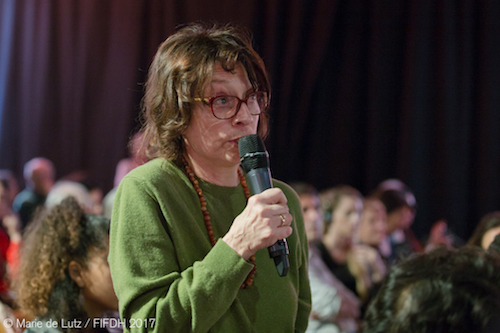
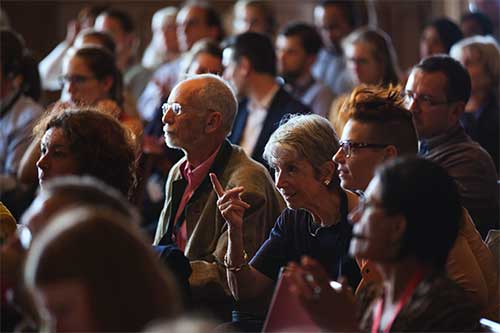
I was at a conference recently where during the Q and A session, the moderator failed to stop a woman from sharing her life experience as a refugee with the audience. Interesting, as it was how she ended up in Oxford from Myanmar, it was not relevant to the subject of the panel.
As the audience became restless with many rolling their eyes, the moderator did try to interrupt and ask for her question. She said she had no question but thought the audience should know about what she went through!
This made me think of how important it is as a moderator or as a presenter that you handle effectively the Q and A session.
Below are some tips based on my experience as a moderator and presenter who trains in both disciplines.
The audience member, who doesn't ask a question, but makes a comment.
- Make it clear before you take a question that you want a question not comments. Take a leaf out of the book of Christiane Amanpour, the doyenne of CNN, when she moderated a panel at the UN in Geneva.

By Hiba Samawi, Wiser Humans
Back when I worked in the corporate world, travel was a two week affair - and I time which I would wait the rest of the year for to finally go somewhere new and exotic that would allow me to feel alive.
To make this last longer, I even took six months off to travel around the world nine years ago. It was a wonderful experience - and it actually taught me something very unexpected.
It taught me that travel can be an attitude. That travel doesn't have to be to a far flung exotic destination. It doesn't even have to be a time when we are away from our daily lives of work and family.
Instead, we can also apply the aspects of travel we love to our everyday lives.
We can start building a life we already love, that is filling with alive-ness, instead of seeing travel as an escape from an un-alive life.
Here are five suggestions to start bringing travel as an attitude to every day life.
1. Travel as an attitude means embracing discomfort as a necessary path to growth.
Travel is often about taking a small step - or many steps - away from our comfort zone. This moving out of our comfort zone is where magic can happen - where we discover aspects of ourselves we didn’t even know existed.
Everyday life provides plenty of opportunities to push past our fears - from moving away from a situation or relationship that is no longer working to standing up for ourselves, signing-up to a dating app or even opening up a little bit more with someone we care about.
Travel as an attitude embraces all forms of discomfort as a path to growth - not just the physical discomfort of travel, but also the emotional discomfort that comes from personal growth.
2. Travel as an attitude means being open to new experiences wherever we are.
Travel enables us to experience new things — both man made and natural. Seeing kangaroos on a beach at sunrise, taking a helicopter ride or experiencing Angkor Wat at sunset?
Definitely awe-inspiring.
Yet daily life also provides plenty of opportunities for new experiences IF we create them. These can be as small as trying a new café or restaurant in the city we live in, taking a new class, learning a new language, reading a book or buying an unknown vegetable when grocery shopping.
We can make time to watch the sun set after work or take a different path to work. We can always create new experiences.
3. Travel as an attitude sees differences as enriching rather than threatening.
Travel opens our minds to different ways of doing things. It gently, and sometimes not so gently, reveals that other ways, beliefs and attitudes exist - and that they, too, are valid and even fascinating. In doing so, it provides the opportunity to re-examine our own beliefs and habits.
In everyday life, we are faced with different beliefs and attitudes all around us, yet we often don’t choose to see these as intriguing - annoying is probably a more apt description!
Yet we can always choose to be open to differences in opinions and values that come from our family or co-workers - with appropriate boundaries, of course! Accepting them with the same openness and curiosity we show ‘foreign’ cultures can be a novel experience.
Instead of seething with resentment, we could become curious about this difference:
I wonder why my colleague / family member / boss is reacting in this way? How do they see the world differently to me? What is it about their reaction that triggers me?
Perhaps we will notice what Carl Jung wrote - that "Everything that irritates us about others can lead us to an understanding of ourselves."
4. Travel as an attitude means being open to connection.
Away from the cocoon of our known lives, we are more vulnerable and open, both with people we know and people we don’t. And while we don't always stay in touch with those we meet, for a brief moment, we have walked along the same path, and this interaction leaves us all the richer. It can act as a humble reminder, as Maya Angelou wrote, that "We are more alike, my friends, than we are unalike".
We don’t actually need to physically travel to connect with people or be just a little more open and vulnerable with people around us. We can choose to put our phones down in public places and connect, even if this is just a brief moment of connection.
5. Travel as an attitude means taking distance from life.
Being able to briefly press the pause button on everyday routines provides a bird’s eye view of life. Travel enables us to assess what matters most, to re-evaluate our priorities and what we want or need to change in our daily lives.
A physical change in environment is helpful - yet when this isn't possible we can also explore other ways of gaining a little perspective such as journaling, meditating, yoga, going into nature, therapy/coaching or simply leaving more space to just BE instead of overbooking the week.
Of course, nothing can nor should ever replace real travel. Yet what I have found by bringing travel as an attitude into my life as much as possible is that I no longer see travel as an escape from life. Instead, I see it as a way of enhancing a life I already enjoy.
One's destination is never a place, but a new way of seeing things. - Henry Miller
Author's bio

Hiba Samawi is a Psychologist and Coach working in Geneva, Lausanne and online.
A Swiss-Jordanian mix, she has a Masters Degree in Psychology from the University of Lausanne and is a certified Integrative Nutrition Health Coach from the Institute for Integrative Nutrition (IIN). She previously ran Healthwise.ch, a health coaching business where she also created healthy recipes.
Hiba uses mindfulness-based behavioural approaches such as Acceptance and Commitment Therapy (ACT) and Compassion Focused Therapy (CFT). These are more active forms of therapy where, more than just talk, you learn skills for living.
She specializes mostly in difficulties around relationships, emotions, making healthy change and eating, and also offers group sessions, both in-person in Geneva/Lausanne and online.
www.wiserhumans.com
fb.me/wiserhumans
{tag}link rel="canonical" href="/https://www.wiserhumans.com/blog/2018/8/8/travel-is-an-attitude"{/tag}

Photo credit: Patrick Fore
By Dr. Irina Schurov, LiveRight
Fruit and berry season has arrived! This is a great time of year when we can enjoy eating these fantastic nutrient-rich products and nourish our bodies with plenty of fibre, vitamins, minerals and antioxidants.
Of course, fruit is a very good replacement for pastries, cookies and other “easy carb” snacks for children. However, it is also very easy to enjoy too much fruit during the summer. Especially, if you or your child has a compromised digestive system.
With this in mind, what exactly do we need to know about fruit?
- Fruit digests quickly and is pushed from the stomach to the intestine very early on. Meals that are especially rich in protein and fibre require much more time and gastric juice to digest. For this reason, fruit does not mix very well with other food groups and can disturb the digestive process of the main meal. It is, therefore, advisable to eat fruit as a snack between meals or on an empty stomach.
- Fruit is very sweet and causes a lot of sugar to be released into the blood, leading to a spike in energy. It would, therefore, be sensible to not eat fruit in the evening when your body needs to prepare for good quality sleep.
- Fruit is rich in a type of sugar called “fructose”. Unfortunately, many people cannot digest fructose very well and, instead, absorb large amounts. Researchers showed that up to 40% of people suffer from a condition called fructose malabsorption, in which fructose is inefficiently absorbed within the small intestine due to a limited amount of the fructose digesting enzyme. It is for this reason that, instead of nourishing our bodies, sometimes fruit can simply sit in the gut and be fermented by bacteria. The result of those bacteria feasting on fructose is a lot of gas and bloating, which makes many people feel uncomfortable. Therefore, eating too much fruit at the same time can cause digestive discomfort.
- Fruit is designed by nature to carry seeds and produce new plants. So, similar to grains, fruit and berries contain certain amounts of antinutrients that can irritate the digestive system. Cooking fruit helps to avoid this effect.
- It has been demonstrated that fructose does not trigger the release of “leptin”, a hormone that signals satiety, and instead triggers the release of another hormone called “ghrelin”, a hunger stimulating hormone. That is why eating fruit makes you want to eat even more fruit. Monitoring your portion of fruit could help bring this situation back under control.
To conclude, while you absolutely should enjoy eating fruit during the summer season, please, think about when and how much of this great food you consume. Eat local, organic, fresh and very ripe fruit to gain maximum benefit from these fantastic products.
Author's Bio
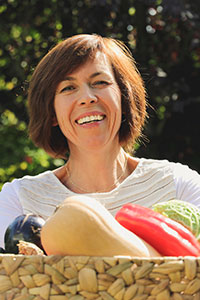
Dr. Irina Schurov is a Nutritional Neuroscientist with a PhD from Cambridge University (UK) and over 20 years’ experience in science and health-providing services. She created and founded LiveRight, an initiative to help others through nutrition and wellbeing strategies. By building an educational platform around healthy eating habits, by restoring the relationships between people and food, by supporting your individual circumstances and through personalized coaching in nutrition, she wants to help you and your family achieve the optimal balance between help and life.
Irina focuses especially on children with ASD and related neurological conditions by addressing the connection between gut and brain by detoxifying, nourishing and resetting a whole body biochemical balance. She provides personalized nutritional support to families and an individual DNA nourishing programme for each child in order to maximise their potential in life.
LiveRight
 © Caux Forum 2018
By Claire Doole, Claire Doole Communications
Recently, I coached the head of a large Swiss NGO for a series of speeches she is giving at a popular summer forum.
We worked on a structure and delivery that holds the attention of a global audience from different backgrounds - academic, non-governmental, diplomatic and corporate.
What the coaching reminded me of is that the theories on memory recall developed by a German Professor during the last century are still valid today. Namely, the ability of the brain to retain information decreases over time.
Professor Hermann Ebbinghaus developed the "forgetting curve" which shows that the sharpest decline is during the first 20 minutes and then it levels off after 1 day. The speed of the decline depends on a number of factors such as how easy, visual or relevant the information is to retain. However, on average as the graph below shows people only retain 40% after the first day.
By Virginie Dor, Space of Mine - Home Organizers
Getting ready for the holidays? There’s no better way to enjoy your vacation than to know you won’t be coming back to a messy home. Here are few of my favourite quick fixes:
Bedroom:

- Use under-bed systems such as roll-out bins and vacuum seal bags to store off-season clothing or extra linen.
- If you’re short on storage space, do away with nightstands and use bookshelves to frame your bed. Or a low shelf at the foot of your bed.
- Room dividers using shelving units or tall cabinets not only help create extra storage space, but improve zoning in small spaces.
- Keep your cords and chargers under control by re-using twist ties, washy tape and shoe boxes to hide extension cords. Don’t forget to label them.
- Motivational speeches: Take a lesson from football
- Children with sensory issues: How to make summer outings fun
- Sunita talks to yoga teacher, Céline Le Roux Schaer
- How to enjoy a healthy BBQ season!
- 6 top tips for an engaging panel discussion
- Looking for an honest espresso
- How Women Rise: Break The 12 Habits Holding You Back From Your Next Raise, Promotion Or Job
- The end of 30's life crisis
- Getting ready for summer
- An interview with Anne-Marie Struijk, Founder of La Maison de Tara
- Are you summer?
- How to craft a memorable sound bite
- Considering a home or office renovation? 10 must-haves for finding the ideal project manager
- The A-Level Diploma
- Spring clean your body!
- A time of optimism
- Delivering powerful presentations
- Saving Swiss Public Service Broadcasting: Tips on structuring a persuasive speech
- An interview with Peter Wharton
- How to be prepared for market volatility – the importance of risk profiling explained
- Confidence: a different approach
- How to reach your peak - an interview with Anders Ericsson
- Moderating with a Cartoonist
- Technology can transform your conference
- Family-friendly Bonfire Night 2017 fireworks shows
- The gentle arrival of Autumn
- Hotel-Restaurant Valrose in Rougemont, Vaud - an interview with John Grohe
- Getting connected with current trends can be stimulating
- Alpine weather forecast
- Moderator, Facilitator and Master of Ceremonies: What is the Difference?
- Ouch, rejection
- Energising events and tips for autumn
- Are you organized?
- Happiness
- Mindfulness at school: a luxury or a necessity?
- “Pain is the agent of change,” Grief Works: Stories of Life, Death and Surviving
- Lucy’s story
- Women and retirement – prepare in advance and be independent – just in case!
- Lessons from a Master Coach: What I learnt about public speaking from a musical maestro
- Our final trip to Glacier 3000
- Sunita Sehmi talks to gender and inclusion specialist, Fleur Heyworth
- The Alpine Property Market June 2017
- "Answer, don't avoid the question Prime Minister"
- Sunita Sehmi: interviewer and interviewee
- Difference between a Babysitter, Aupair and Nanny in Switzerland
- John Tomlinson talks to Sunita Sehmi about Trainer Tools, a collaborative podcast project for trainers
- The Local Media: Friend or Foe? How to constructively engage with local journalists
- Grief ain’t linear and other things I learned from the end of my marriage
- Taking the stress out of exams
- Why are friends an important part of your support system?
- Champion of women, food guru, inspirational entrepreneur: Pinky Lilani, the Ultimate Spice Girl
- Top 5 tips for expectant parents
- How to moderate a hot topic
- Eco building in the Alps
- Many Expats unaware their UK pensions have been affected
- Sharing happiness with Frederik Van Lierde, founder of Gift Voucher Kiosk
- How to sound natural when reading a speech
- Cultivating Connection
- Travel: Port de Pollença, Mallorca
- The Entrepreneur's Wife: A Survival Guide
- Raising Global and Mobile Kids
- Letting Go - How to make forgiveness a habit to give your life a boost
- The inaugural speech of Donald Trump: How persuasive was it?
- Happiness
- Last Christmas I gave you my heart…Saas-Fee
- Moderating with Macron
- Understanding the Law of Polarity
- Find out more about abandonment recovery in Sunita Sehmi's interview with Susan Anderson
- Everything Hummus
- All about bulbs
- What is concussion?
- The end of the holidays
- The power of swimming for both your body and mind
- Yogi banker brings corporate careers and holistic lifestyles together
- Why not all children are jumping with joy to be “back to school”
- Lights, cameras and plenty of action at the 69th Locarno Film Festival
- Find out more about Shakti Leadership in Sunita Sehmi's interview with Nilima Bhat
- Flexible working from the perspective of a Line Manager/Team Leader
- Expats driving in France : not always on the right side of the road.....
- "Anyone can be a leader - it is a choice": an interview with Willem Jan Hofmans founder of YIELD
- Baby, it's cold outside
- Sunita Sehmi talks about The Work with Byron Katie
- DSLR camera buying guide for beginners
- Coffee: healthy or not?
- Sweet Potato Stir-Fry
- Performance, an important life skill
- January is Get Organized (GO) Month!
- Pension Protection Fund - is your pension safe?
- Quick and healthy gingerbread
- “Coughs and Sneezes Spread Diseases” : What you need to know about the flu
- Tips for professional women during maternity leave
- The Ralda family talks to Sunita Sehmi about why sponsoring their olive trees makes a great Christmas present… that keeps on giving throughout the whole year.
- Ensure that you are insured: you may be covered in the event of an accident or breakdown outside of Switzerland, but is your car?
- The benefits of a bilingual education
- Capital Gains Tax for Non-UK Residents
- 5 key elements of a good LinkedIn profile picture
- Where to buy curtains in the Geneva area
- QROPS and returning to the UK
- Transition to parenthood - tips for professionals pre-maternity leave
- Is Asia the place to be? Expat packages are highest in Japan, while pay levels in China keep rising
Page 34 of 72