



Below you will find a selection of the most recent entries from bloggers in our Work/Business section.
To view the entries from individual bloggers, click on the links below:
- Claire Doole - Claire Doole Communications
Claire is a former BBC correspondent and international spokeswoman who is passionate about helping people communicate with confidence. Since 2006, she has successfully trained hundreds of professionals in the art of presenting and public speaking, talking to the media, managing communications in a crisis, and writing for the web. In addition, she has coached C-level executives and public figures to give powerful TEDx and TED style talks in Europe and the Middle East. A Swiss and UK national, Claire trains and coaches in French and English.
- Elizabeth Ballin - Life Coach
As a long time member of the international community in Geneva, Elizabeth Ballin has been coaching adults and students from all parts of the world. She has coached business professionals, musicians/artists, couples, families and adolescents. She is a fully accredited Life Coach by the International Coaching Federation. Elizabeth Ballin, Life Coach
- Patrick Hoza - US Tax & Financial Services
Since 1990, Patrick has many years of experience with US individual expatriate taxation under his belt, including High Net Worth Individuals, streamline/voluntary disclosure filings and tax consulting, as well as working with large multinationals like Novartis, BP, Hewlett Packard and General Electric. He has extensive knowledge in serving both US expatriates and resident and non-resident aliens with their US tax-related issues. Patrick Hoza is a Tax Director at US Tax & Financial Services, with extensive experience in all aspects of Individual US tax and Expatriation, including Hight Net Worth Individuals and large multinationals.
Patrick started his career in 1990 in California, with Westpro Ltd., as a Senior Tax Consultant, then spent the middle part of his career working at KPMG and Ernst & Young. During his time with Ernst & Young, he worked and lived in Russia, France and finally Switzerland. He has gained a valuable working knowledge of the respective income tax regulations in all of these countries.
Patrick holds a B.A. in International Relations from the University of Colorado, is a member of the National Association of Enrolled Agents and is a Certified Acceptance Agent.
-
Melitta Campbell - Business Coach
Business Coach and Mentor with nearly 3 decades of business experience and a passion for helping women confidently build a business they love. She is also the founder of the Swiss Entrepreneurs Club and president of the Swiss Riviera Toastmasters Club in Montreux. Originally from Wales, she now lives in Montreux in a chalet she has renovated with her husband overlooking the Swiss Alps. - Sunita Sehmi - Walk The Talk
Founder of Walk The Talk, Sunita has been training, developing and now coaching Business Communication skills in both companies and educational establishments for over twenty years. She has a passion for helping people to maximise their potential and created Walk The Talk with the sole aim to drive each and every client to perform their best.
- Robert Harris- Forth Capital
With over 25 years experience working for some of the major financial institutions in the City of London, Robert is a founding partner of Forth Capital, the leading expat financial advisory company in Switzerland. Regulary quoted in newspaper articles and magazines, he is well placed to advise expats on a variety of financial issues that may arise during their time living in Switzerland.
- Debbie Croft - Croft Coaching
As the founder of Croft Coaching, Debbie has a passion for helping people overcome challenges, embrace change and live life to the full; with an ethos of “work hard, play hard”.
- Sarah Santacroce, https://humane.marketing/coaching
Areas of Expertise: Conscious Business Coaching, Humane Marketing, LinkedIn
Sarah Santacroce is a Conscious Business Coach for Coaches and service-based solopreneurs, founder of Humane Marketing and author of Marketing Like We’re Human, Selling Like We’re Human, and Business Like We’re Human. Since 2006 in marketing, entrepreneurship, and conscious business coaching, she’s supporting changemakers worldwide through workshops, programs, and her signature Conscious Business Coaching. Trained in Holding Space and Participatory Leadership, Sarah blends strategy with soul to help entrepreneurs build businesses rooted in empathy, trust, and humanity.
Sarah has been a guest on nearly 100 podcasts and has been podcasting since 2016. Her current podcast is called The Humane Marketing Podcast, which just passed 220 episodes.
- Diana Ritchie - SSC Sàrl
A Director at Swiss Career Connections, Diana will provide you with some useful tips for job hunting.
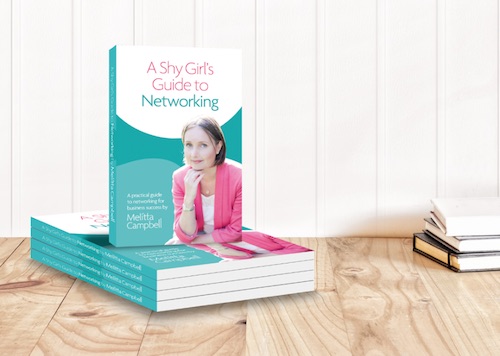
We are so excited for one of our regular knowitall.ch bloggers, Melitta Campbell, as she has recently wrote and published a book. A Shy Girl's Guide to Networking is ready to order right now. She has kindly offered 5 signed copies for a competition; read on to find out how.
If you’ve ever wondered how some people network so effortlessly, while you feel awkward and out of place, this book is for you.
Written from a shy girl’s perspective, in this book Melitta Campbell shares the exact steps introverts can take to master the three phases of networking, both online and in person, to build powerful and lasting relationships.
As an introvert herself, getting out into the ‘networksphere’ was always a battle for Melitta until she created her innovative VICTORY Formula. This laid out her own rules of engagement, enabling her to embrace her natural abilities as an introvert, grow in confidence and shine while networking. In learning this formula for yourself, you’ll be able to enjoy the same results.
This small, but mighty book will help you:
- Overcome your networking fears and hesitations
- Create your personalised networking vision and plan
- Manage engaging conversations and move on politely
- Leverage the three phases of networking for business success
- Build your personal brand through your in person and online networking
- Embrace your natural (and powerful) skills as an introvert
- …and much more!
By Claire Doole, Doole Communications
Organising a virtual press briefing is to coin the Thai-English phrase – “same same but different.”
The basics are the same. You need to have news, which is impactful, timely and ideally topical. It may seem obvious, but too often press briefings are organised solely to “educate” the media about an issue. I can’t tell you how many I have left as a BBC Foreign Correspondent without a story to broadcast!
But there are many differences; while virtual briefings have many advantages notably cost, convenience, geographic reach and you could argue carbon footprint, as with all digital events they need to better prepared and moderated.
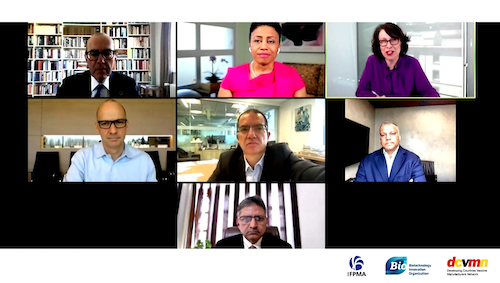
For the past year I have been moderating virtual media briefings for the International Federation of Pharmaceutical Manufacturers Associations on COVID 19 – last week was my 6th – and also advising companies and organisations on how to run and speak at them.
Preparing a virtual press briefing
Based on my experience on both sides of the fence as a moderator/media consultant/trainer and former journalist, here are four key questions you should ask yourself:
By Claire Doole, Doole Communications
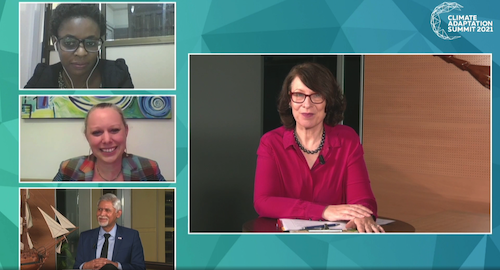
What is the biggest challenge when organising a virtual event? Technical glitches are high up on the list when I ask this question in my workshop on organising engaging virtual events.
A year on since the pandemic first hit, we are still challenged and aggravated by poor video and sound quality, speakers that fail to connect and lack of time management. At one event I moderated, so many outside lines went down I ended up talking at length to the one guest I fortunately had in the studio. If he hadn’t been with me, we would have just had to go on a break and come back once we reconnected with our speakers.
So, how do you organise a technically glitch free event?
Pre-recordings
I recently moderated the Global Vaccine Immunization and Research Forum (GVIRF) – an event spanning three days over two continents – where all the speakers were pre-recorded. They or proxies were brought back live to answer audience and moderator questions.
If you do pre-record, speakers must keep to time. If you are pre-recording a panel discussion or interview, it must be done “as live” so that it is kept to time. If you go over, you will have to cut something else later in the programme.
Broadcasters give themselves flexibility, editing short and longer versions.
By Claire Doole, Doole Communications
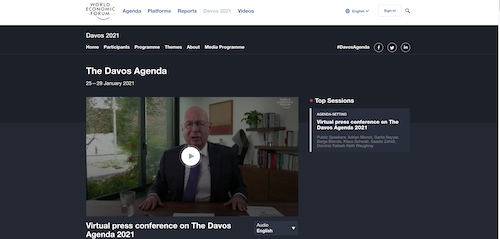
This week the powerful icons of business, finance and a spattering of civil society will not meet in the Swiss ski resort of Davos for the annual World Economic Forum’s flagship meeting. Instead, they will meet virtually for a meeting billed as the Davos Agenda which will focus on rebuilding trust and shape the principles, policies and partnerships needed for 2021.
I am hoping the virtual meeting will also showcase and shape best practice in terms of organising virtual events. Many companies and organisations have made the shift from physical to digital events – recognising that producing a successful event is like producing a TV programme. As I wrote in my September blog, they must be shorter, more varied, more creative, better moderated and rigorously rehearsed.
But since then, it has become even more obvious that organisers are going to have to up their game if they are to counter the increasing challenges of high attrition rates.
Let me share some anecdotal evidence. Organisers are not getting the numbers as “zoom fatigue” sets in and attendees zoom out. In some instances, there are just too many virtual events. One communications director from an international organisation told me they organised 67 webinars last year – sometimes up to three a week– and had to make sure staff took part to ensure strong numbers.
This year, faced with budget cuts, international organisations and NGOs are scrambling for relevance with donors, which means the pandemic of virtual events shows no sign of slowing. However, they systematically risk forgetting the well-known saying in communications that less is more.
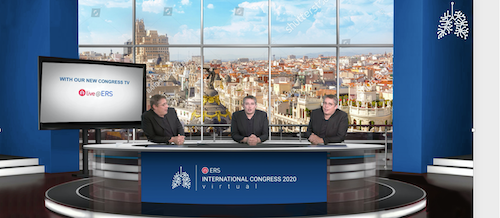
photo courtesy of ERS
By Claire Doole, www.doolecommunications.com
Many of you are moderating events and panel discussions in the virtual world. If you are an in-house moderator, you have an advantage over someone like myself in that you automatically know the subject area. However, that doesn’t mean that you can “rock up and just have a conversation” in the words of someone I coached recently in how to moderate at a virtual event!
Professional moderators may make it look effortless as they seamlessly transition from one speaker, subject area or segment to another, but it takes a lot of preparation to work out the editorial narrative of an event and the flow of a specific panel discussion.
In many respects in the virtual world, it is even harder for two main reasons:
1) It is more challenging to capture and hold the audience’s attention and;
2) Organizers are packing their events with too many speakers.
If you want to overcome these challenges and be a dynamic virtual moderator, have a look at some of my tips below:
Work with the organisers on event design
I run workshops and act as a consultant to organisations and companies on how to design an entertaining, participatory and insightful event. As an in-house moderator, however, you are well placed to influence the narrative and flow of the event from the start.
- Make sure they have made the shift from the real to virtual world and apply the principles of a TV news programme, namely short, varied and creative.
- Advise on the format. Blocks of speakers who present one after each other is overwhelming and potentially tedious for the audience. I have seen programmes where nine speakers make keynote speeches, presentations or remarks with no audience or moderator intervention for the first hour. Even two keynote speeches of 20 minutes each back to back before the audience Q&A is asking a lot of the audience.
- Limit the number of speakers in a panel discussion to no more than four. I have turned down panel discussions where there are seven speakers as it is impossible to generate a lively discussion of views. It goes without saying that it is frustrating for the panelists to be given so little time to get their points across and can certainly lead to information overload for the audience.
- Engaging Presenting in the virtual world
- Business Coach versus YouTube Mentors
- Successful virtual events are good television
- Expatriation the easy way or How I learned to give up my US citizenship and breathe freely again
- Streamlined Voluntary Disclosure for US citizens living in Switzerland
- Facilitating engaging meetings in the virtual world
- The power of virtual learning particularly in a pandemic
- 10 Tips for Moderating Dynamic Virtual Meetings
- Unprecedented pandemic press conference from pharma industry
- Business Success Secrets from a Local Business Coach for Women
- Storytelling is an essential professional skill
- How to Plan your Business for Success in 2020
- Creating a STAR panel discussion
- An end to "Manels" and "Manferences" - a Moderator's View
- Helena Rubenstein - Opportunity missed to tell the story of a great woman
- How to make your point the right way
- How to succeed at a video job interview
- Storytelling to further your career
- A job interview is a presentation
- The Perfect Career for Trailing Spouses?
- Avoiding Oscar Night Gaffes
- Is Davos the gold standard of panel discussions?
- Search Inside Yourself: born at Google and based on neuroscience
- Time in the market, not timing the market
- You Too Can Be A Powerful (TEDx) Public Speaker
- What Makes a Powerful TED Talk?
- Sunita meets one of the authors of "The Joy of Leadership"
- Building Rapport for Effective Communication
- Benefits of Next Generation Passive Investment Strategies
- Sunita talks to plant-based Chef Anou Boccasam
- Handling Question and Answer Sessions
- How to construct a memorable speech
- Motivational speeches: Take a lesson from football
- Sunita talks to yoga teacher, Céline Le Roux Schaer
- 6 top tips for an engaging panel discussion
- How Women Rise: Break The 12 Habits Holding You Back From Your Next Raise, Promotion Or Job
- An interview with Anne-Marie Struijk, Founder of La Maison de Tara
- How to craft a memorable sound bite
- Delivering powerful presentations
- Saving Swiss Public Service Broadcasting: Tips on structuring a persuasive speech
- An interview with Peter Wharton
- How to be prepared for market volatility – the importance of risk profiling explained
- How to reach your peak - an interview with Anders Ericsson
- Moderating with a Cartoonist
- Technology can transform your conference
- Hotel-Restaurant Valrose in Rougemont, Vaud - an interview with John Grohe
- Moderator, Facilitator and Master of Ceremonies: What is the Difference?
- “Pain is the agent of change,” Grief Works: Stories of Life, Death and Surviving
- Women and retirement – prepare in advance and be independent – just in case!
- Lessons from a Master Coach: What I learnt about public speaking from a musical maestro
- Sunita Sehmi talks to gender and inclusion specialist, Fleur Heyworth
- "Answer, don't avoid the question Prime Minister"
- Sunita Sehmi: interviewer and interviewee
- John Tomlinson talks to Sunita Sehmi about Trainer Tools, a collaborative podcast project for trainers
- The Local Media: Friend or Foe? How to constructively engage with local journalists
- Champion of women, food guru, inspirational entrepreneur: Pinky Lilani, the Ultimate Spice Girl
- How to moderate a hot topic
- Many Expats unaware their UK pensions have been affected
- Sharing happiness with Frederik Van Lierde, founder of Gift Voucher Kiosk
- How to sound natural when reading a speech
- The Entrepreneur's Wife: A Survival Guide
- The inaugural speech of Donald Trump: How persuasive was it?
- Happiness
- Moderating with Macron
- Find out more about abandonment recovery in Sunita Sehmi's interview with Susan Anderson
- Yogi banker brings corporate careers and holistic lifestyles together
- Find out more about Shakti Leadership in Sunita Sehmi's interview with Nilima Bhat
- Flexible working from the perspective of a Line Manager/Team Leader
- "Anyone can be a leader - it is a choice": an interview with Willem Jan Hofmans founder of YIELD
- Sunita Sehmi talks about The Work with Byron Katie
- Pension Protection Fund - is your pension safe?
- Tips for professional women during maternity leave
- The Ralda family talks to Sunita Sehmi about why sponsoring their olive trees makes a great Christmas present… that keeps on giving throughout the whole year.
- Capital Gains Tax for Non-UK Residents
- 5 key elements of a good LinkedIn profile picture
- QROPS and returning to the UK
- Transition to parenthood - tips for professionals pre-maternity leave
- Is Asia the place to be? Expat packages are highest in Japan, while pay levels in China keep rising
- Tools I use in my business
- Lifetime Allowance Protection
- Balancing parenthood with professional life
- Sunita Sehmi interviews one of Geneva's relocation agencies: Welcome Service
- The importance of the Lifetime Allowance in pension valuations
- Should I pay for a LinkedIn Premium Account?
- Personal tax measures announced in the Summer Budget
- Interview with Juliette and Michael McGannon, founders of the McGannon Health Group
- Another Greek Tragedy should give us all pause for thought
- What is wealth management and what can wealth managers do for you?
- Interview with Vladimir Kovin, founding partner of the Overcome The Barrier project
- Why social media is not working for you
- An interview with Yateendra Sinh, CEO of Lausanne Hospitality Consulting SA
- What’s the real price of oil?
- 5 small business habits to stop in 2015
- An interview with Tara Swart, CEO of The Unlimited Mind
- An interview with Remy Siegrist, President of Citizen of our World
- Professional networking - Part 2:
- Professional networking - Part 1
- An interview with Andy Puddicombe, meditation and mindfulness expert, and co-founder of Headspace
- Tax: The hidden dangers and what you can do about them
- An interview with Manor Directors, Magdalena Boos and Jean-Louis Bornet
Page 8 of 30