



Guest Blogs
Knowitall.ch often invites local experts in their field to contribute to their own blogs on our site. This means not only you will benefit from the useful recommendations that we make on our News pages, but you can also profit from some of the great advice and tips that these experts have to make on their favorite subjects. Whilst each of these bloggers has been recommended to us at some point during the evolution of Know-it-all passport and knowitall.ch, obviously we are not able to test out all the suggestions they make on their blogs, nor do we necessarily agree with all their opinions. So if you do find one of their tips useful (or not!), do let us know!
To make these blogs more accessible to you, we have now decided to group them altogether in one section, entitled Guest Blogs, accessible from our main menu bar. We will also post the most recent blogs on the home page of our site in the right hand column.
We are still building up this area of the site, and are looking for bloggers in a number of sections, including Your Home, Travel, and Leisure, so if you feel you have a useful contribution to make in either of these areas, and have the time to submit blog entries approximately every month, then please get in touch!

by Katie Harwood, Haut-Lac International Bilingual School
Sometimes parents hesitate when faced with choosing between English or bilingual streams. Which will be best for their children?
This article is here to demystify that decision, as neither option is right or wrong. Both can suit any family. It just depends on what is best for their lifestyle and expectations of the future.
Why English?
- English is currently the world’s most connected language.
- It’s a language used for worldwide communication, so achieving competency or mastery is an incredible asset for anyone.
- English will open up a student’s future.
- Young students who are still early in their international school career will find that knowing English will be a boon when creating friendships. Older students who demonstrate a good level of English will most likely be more appealing to employers worldwide.
- International students whose families are often on the move may also benefit from focusing on learning solely in English, rather than beginning to learn French before moving on again. English will be the constant language in the lives of international school kids, so it is best for them to develop their skills in this language as fully as possible.
- Following the English programme may also benefit local and Swiss families, who wish to give their children a deep English immersion, so as to raise their level more quickly than would happen in public school. It will also benefit students who arrive with neither English nor French. Rather than learn two new languages right away, English will be the easier language to take on first. When they feel ready, students may always try the bilingual programme later.
A gentle introduction to bilingualism: If learning French feels like a very large task, the English stream can be an easier way to get started. Students will get a period of French a day in the primary and infant sections, and can take beginner French classes in secondary. By building their confidence slowly, they will know in time whether they’re ready and willing to transition into the bilingual stream or not.

By Elizabeth Ballin, Life Coach https://ballincoaching.ch
As summer holidays come to a close, I am always reminded of how I felt as a teenager about to start a new school year. Sitting on the plane, heading home from vacation, I would be excited at the idea of returning to school. I made many promises to myself: I would be a great student, be physically fit, have lots of friends, maybe even make my parents proud! But every year, I discovered that meeting those goals wasn’t so easy to do. Each time I faced adversity, my self-esteem plummeted.
Many students seem to have a difficult time overcoming obstacles and accepting failure. They lose motivation and fall into the habit of procrastination. They can have high aspirations but can easily be dissuaded when confronted with life’s changes.
For a lot of us, not just students, our expectations do not match the reality of what it takes to reach our goals. If we don’t succeed, we can become trapped into not believing in ourselves, as I did when I was young. We freeze, we ruminate, we catastrophize. We’d rather do nothing than face failure; anxiety builds up, and we step away from what could be an opportunity of a lifetime.
Granted, not all students were like me. Over the past 15 years working with teens, I have noticed that some just thrive in the face of challenge. They bounce back from failure and are even able to manage personal trauma. They have what is known as resilience - the ability to “transform hardship into challenge, failure into success, helplessness into power’*.
As a life coach and a mindful practitioner, with a leaning on positive psychology, my interest in resilience grew. I began to notice that people who were more resilient and more mindful were handling life’s demands with a more positive attitude and were generally happier.

by Patrick Hoza, US Tax & Financial Services
While the Streamline Program has been around for quite a few years, it’s worth mentioning again for those US persons that have still not filed their returns or corrected past mistakes but were not aware of the program. The IRS accepts that taxpayers should not be exposed to extremely harsh penalties for a non-wilful failure to comply with all the various tax reporting requirements. The IRS Streamlined Voluntary Disclosure program is specifically for taxpayers who can certify that their failure to file all information, report all income and pay tax was due to ‘non-wilful conduct’ – that is, due to negligence, inadvertence and mistake, or good faith misunderstanding of these legal obligations.
The program is applied differently for US Persons that can qualify under the offshore version of the program, and those that must use the US resident program. We speak to the offshore version below.
Are you eligible?
To be eligible for the Offshore Procedure the taxpayer must meet a non-residency requirement. This requirement is met if:
- in any one or more of the most recent three years for which the US tax return due date, or properly applied for extended due date, has passed (the ‘covered tax period’)
- the individual did not have a US abode and was physically outside the United States for at least 330 full days
File the returns, pay the tax
For each of the most recent three years for which the US tax return due date (or properly applied for extended due date) has passed, the procedure requires that the taxpayer:
- file delinquent or amended tax returns, together with all required information returns
- file any delinquent FBARs (for each of the most recent 6 years for which the FBAR* due date has passed)
- pay the full amount of tax and interest due with the delinquent or amended returns
By Claire Doole, www.doolecommunications.com
Are you suffering from Zoom fatigue as you rush from one online meeting to another? I am using Zoom as shorthand for all the different platforms that are jostling to sign you up as a customer. In my opinion, Zoom is by far the most interactive and participatory platform, although MS Teams and Webex are catching up.
But the platform is not the biggest challenge to facilitating an online meeting. According to participants in my eWorkshops it is the passive audience, made even worse when people turn off their cameras! Number two, by the way, is lack of non-verbal cues and number three technical glitches.
As a meeting facilitator you have to work hard to get and keep people’s attention. And even harder if you want to break through the virtual divide and get people to engage and participate. In the real world, our brain switches off every 10 minutes if it is not stimulated, so imagine how quickly it tunes out in the virtual world.
The solution is to view facilitating a meeting like running a training session. You have to borrow tools and techniques from training to build engagement and participation.
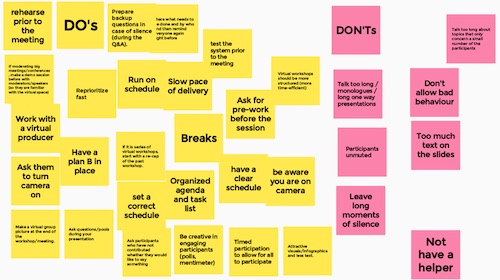
Here are some of my most effective tools to boost your meeting.
Video link to recipe here: https://youtu.be/fr0ffjn7CMM
Christmas in July: If you think turkey and stuffing are just for the holidays, think again!
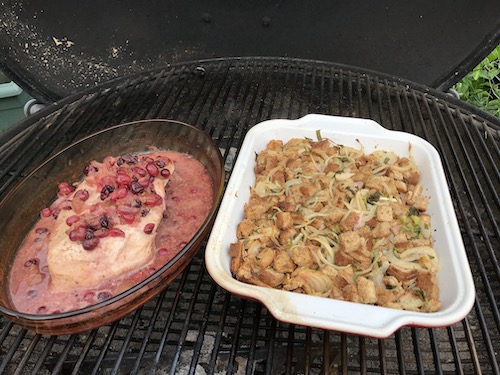
Summertime is also a "holiday time" and I love using the Weber Ranch Kettle barbecue to cook large meals. This succulent and moist roasted turkey breast with casserole stuffing is just the thing!
At the end of the video, I just show you a glimpse of an alternate recipe.
TURKEY
1kg turkey breast
1 onion
mustard
white wine
preserved lemons (fresh lemons can be substitued)
fresh cranberries (dried cranberries can be substitued)
- Find your Swiss Spot - Summer Series: Les Pléiades & Blonay
- Interior Redesign – Your Summer Breeze
- Summer Camps are back - post-Covid19!
- The power of virtual learning particularly in a pandemic
- How can parents approach their children about COVID-19?
- Gardening and planting: Our new normal?
- Snail in a Hole (Toad in a Hole) - No snails nor toads were used in this recipe!
- Pumpkin chestnut soup with chorizo chips
- Plan your transition: Covid-19 confinement time is coming to an end
- Swiss home renovation in the time of COVID
- ... and so it continues. More gardening ideas from Tara
- 10 Tips for Moderating Dynamic Virtual Meetings
- Gardening in these unusual times
- Unprecedented pandemic press conference from pharma industry
- It’s a Covid-marathon
- Business Success Secrets from a Local Business Coach for Women
- Storytelling is an essential professional skill
- Adulting – Or how to grow up faster
- Choosing the right photography course provider
- Vertical Tutoring System gives students a sense of community
- Why New Year’s resolutions never work
- We sold our Swiss house... and this is what we learned in the process
- How to Plan your Business for Success in 2020
- Creating a STAR panel discussion
- How to avoid procrastination - prioritization and planning
- A tapestry of leaves - My Swiss garden
- Virtual clutter aka online pollution
- An end to "Manels" and "Manferences" - a Moderator's View
- Explaining the International Primary Curriculum - IPC
- The start of Mental Health First Aid training in English in Switzerland
- Harvest time in a Swiss Garden
- Choose joy. What a phrase! A concept! A revolution even!
- Helena Rubenstein - Opportunity missed to tell the story of a great woman
- Back to school – time to relax!
- How to make your point the right way
- Is your child active enough?
- How to succeed at a video job interview
- Kids and Zero Waste
- Storytelling to further your career
- Reluctant players – does your child really want to play football?
- A job interview is a presentation
- The Perfect Career for Trailing Spouses?
- Avoiding Oscar Night Gaffes
- 8 solutions for solving teacher-related problems
- The month of March is full of surprises
- Is Davos the gold standard of panel discussions?
- Search Inside Yourself: born at Google and based on neuroscience
- How to be an outstanding children’s football coach
- Information about the A-Level Diploma
- Time in the market, not timing the market
- Does My Child Have a Speech or Language Delay?
- You Too Can Be A Powerful (TEDx) Public Speaker
- What Makes a Powerful TED Talk?
- Renovating in Geneva: a 19th century home gets a 21st century heating system
- Sunita meets one of the authors of "The Joy of Leadership"
- Building Rapport for Effective Communication
- New beginnings
- Set your internal clock for a great winter season
- Benefits of Next Generation Passive Investment Strategies
- Sunita talks to plant-based Chef Anou Boccasam
- Handling Question and Answer Sessions
- Travel as an attitude
- The science of eating fruit
- How to construct a memorable speech
- QUICK organizing tips for each room of your house
- Motivational speeches: Take a lesson from football
- Children with sensory issues: How to make summer outings fun
- Sunita talks to yoga teacher, Céline Le Roux Schaer
- How to enjoy a healthy BBQ season!
- 6 top tips for an engaging panel discussion
- Looking for an honest espresso
- How Women Rise: Break The 12 Habits Holding You Back From Your Next Raise, Promotion Or Job
- The end of 30's life crisis
- Getting ready for summer
- An interview with Anne-Marie Struijk, Founder of La Maison de Tara
- Are you summer?
- How to craft a memorable sound bite
- Considering a home or office renovation? 10 must-haves for finding the ideal project manager
- The A-Level Diploma
- Spring clean your body!
- A time of optimism
- Delivering powerful presentations
- Saving Swiss Public Service Broadcasting: Tips on structuring a persuasive speech
- An interview with Peter Wharton
- How to be prepared for market volatility – the importance of risk profiling explained
- Confidence: a different approach
- How to reach your peak - an interview with Anders Ericsson
- Moderating with a Cartoonist
- Technology can transform your conference
- Family-friendly Bonfire Night 2017 fireworks shows
- The gentle arrival of Autumn
- Hotel-Restaurant Valrose in Rougemont, Vaud - an interview with John Grohe
- Getting connected with current trends can be stimulating
- Alpine weather forecast
- Moderator, Facilitator and Master of Ceremonies: What is the Difference?
- Ouch, rejection
- Energising events and tips for autumn
- Are you organized?
- Happiness
- Mindfulness at school: a luxury or a necessity?
Page 21 of 72