



Guest Blogs
Knowitall.ch often invites local experts in their field to contribute to their own blogs on our site. This means not only you will benefit from the useful recommendations that we make on our News pages, but you can also profit from some of the great advice and tips that these experts have to make on their favorite subjects. Whilst each of these bloggers has been recommended to us at some point during the evolution of Know-it-all passport and knowitall.ch, obviously we are not able to test out all the suggestions they make on their blogs, nor do we necessarily agree with all their opinions. So if you do find one of their tips useful (or not!), do let us know!
To make these blogs more accessible to you, we have now decided to group them altogether in one section, entitled Guest Blogs, accessible from our main menu bar. We will also post the most recent blogs on the home page of our site in the right hand column.
We are still building up this area of the site, and are looking for bloggers in a number of sections, including Your Home, Travel, and Leisure, so if you feel you have a useful contribution to make in either of these areas, and have the time to submit blog entries approximately every month, then please get in touch!

By Dr Mecky McNeil, HealthFirst
November is probably the most challenging month of the year. The turning back of the clocks, and with it the shorter days, signifies winter is around the corner. This year, the days feel even darker than usual, as we are facing the greatest health crisis of a lifetime. But alongside Covid, we are also experiencing a mental health pandemic. More than 1 billion people globally are suffering with mental illness. This is being further impacted by isolation following quarantine and the need to socially distance and wear masks to reduce the risk of infection.
Every November since 2003, Mo Bros across the world have been growing moustaches and setting themselves challenges to raise awareness of men’s health issues.
This year alongside raising awareness of prostate and testicular cancer, they are addressing men’s mental health and suicide. Their target is to reduce premature death in men by 25% by 2030.
One man dies every minute from suicide across the world. In England 1 in every 8 men suffer from a mental illness including anxiety, depression and obsessive-compulsive disorder (1), and men are 3 times more likely than women to have an alcohol use disorder (2). These numbers are the tip of the iceberg as they only represent the cases reported and diagnosed.
Gender stereotypes and society’s expectations mean that many men do not feel able to speak out about how they are feeling, leading them to look for other ways to cope. Self-medicating with alcohol to reduce their distress and withdrawing from others for fear of judgement are sadly common outcomes.
In their moment of need, many men simply do not know who, or where, to turn to. The reduced inhibitions from using alcohol in this moment of crisis, means thoughts of suicide may seem the only option. Sadly, this dangerous cocktail can lead to someone acting on these thoughts and the devastating outcome of a premature and avoidable death.
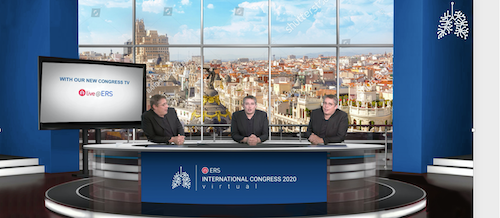
photo courtesy of ERS
By Claire Doole, www.doolecommunications.com
Many of you are moderating events and panel discussions in the virtual world. If you are an in-house moderator, you have an advantage over someone like myself in that you automatically know the subject area. However, that doesn’t mean that you can “rock up and just have a conversation” in the words of someone I coached recently in how to moderate at a virtual event!
Professional moderators may make it look effortless as they seamlessly transition from one speaker, subject area or segment to another, but it takes a lot of preparation to work out the editorial narrative of an event and the flow of a specific panel discussion.
In many respects in the virtual world, it is even harder for two main reasons:
1) It is more challenging to capture and hold the audience’s attention and;
2) Organizers are packing their events with too many speakers.
If you want to overcome these challenges and be a dynamic virtual moderator, have a look at some of my tips below:
Work with the organisers on event design
I run workshops and act as a consultant to organisations and companies on how to design an entertaining, participatory and insightful event. As an in-house moderator, however, you are well placed to influence the narrative and flow of the event from the start.
- Make sure they have made the shift from the real to virtual world and apply the principles of a TV news programme, namely short, varied and creative.
- Advise on the format. Blocks of speakers who present one after each other is overwhelming and potentially tedious for the audience. I have seen programmes where nine speakers make keynote speeches, presentations or remarks with no audience or moderator intervention for the first hour. Even two keynote speeches of 20 minutes each back to back before the audience Q&A is asking a lot of the audience.
- Limit the number of speakers in a panel discussion to no more than four. I have turned down panel discussions where there are seven speakers as it is impossible to generate a lively discussion of views. It goes without saying that it is frustrating for the panelists to be given so little time to get their points across and can certainly lead to information overload for the audience.

By Katie Harwood, Haut-Lac International Bilingual School in Switzerland
Many of us might have emerged from the countrywide lockdown having learnt a thing or two about ourselves that we might not have known before. Being kept indoors has been a learning experience of its own, complete with highs and lows like any emotional rollercoaster.
However, this hasn’t been an isolated phenomenon pertaining to adults only. Children and teenagers were also exposed to visions of the world and potential realities they had never before considered. This being the case, they may still be feeling some residual emotion that would be best discussed out in the open. To explore these new feelings properly, they may benefit from deepening their emotional vocabulary to include new sentiments beyond happy, sad, scared and angry. Giving more colour to the words used to describe our emotions makes it much easier to accurately share our feelings.
Practice Talking About Your Own Feelings More Openly
It is natural for parents to want to shield children from certain emotions. However, never seeing any adults displaying difficult emotions can make children feel self-conscious when doing so. In response, they might internalise their feelings, which does not erase them but prevents any constructive discussion taking place.
Every Feeling is Okay
In the same vein, be conscious not to demonise any emotions, as this will encourage children to share their feelings with you. All emotions are natural and a response to something happening in life. The easier they are to talk about, the less they are allowed to dominate the consciousness. Being able to talk about frustration, anxiety, anger etc. means having an outlet to safely release it.

By Aurea Fagel, text and photos
Three things come to my mind when autumn is here: the colorful leaves, “la chasse” or game meat and wine tasting!
Autumn Leaves
Where to witness the grandeur of the autumn leaves? Switzerland has definitely a handful of beautiful places if the weather ensures the leaves wither gracefully. Photographers and nature lovers go in search for that perfect spot.
The Arboretum in Aubonne is one such place to see a display and reflection of colorful trees. This national park has been in existence since 1968 and houses a variety of plants, flowers and trees. Being a photographer myself I have been going there many times to shoot autumn. The place has lots of short and long trails for everyone and holds events all-year. This coming Oct 18 and 25, there will be a guided tour of the Japanese forest and the colorful autumn trees respectively! So mark your calendars and allot at least half a day.
Another great spot is the Ballenberg in Brienz, central Switzerland. It is the largest open-air museum in Switzerland which showcase Swiss traditional homes and handicrafts. Autumn is a good time to visit if only for the colorful leaves. Best to wear your hiking boots or comfy shoes as it will involve a lot of walking!

By Katie Harwood, Haut-Lac International Bilingual School
In our previous article about the IBCP (International Baccalaureate Career-Related Programme), we explored the many ways in which the course prepares and enables students for university. Conversely, if you are looking to see how it sets students up for a smooth and positive entrance into the world of work, read on. This article has you covered.
Different from the IBDP (Diploma Programme)
The core components of the IBCP are where your vocational training begins, veering away from the traditional IBDP framework. The IBCP covers everything from extensive work experience, to professional and practical skills development and research capabilities. What’s more, the service learning element will help you to develop a deeper sense of community and cooperation. Thanks to these tools, the confidence and maturity you display when handling adult situations will grow steadily, both in and out of the workplace.
The IBCP will teach you what is expected in terms of attitude, behaviour and practical skills when you enter the professional arena. As one student attests, “They introduce you to the real world. You have to learn a lot of other things, like… about getting jobs, creating your LinkedIn, how you market yourself, how you deal with people who disagree in a way that is productive…”
Such preparation will be visible in the assurance and ease you will later be able to demonstrate in a job setting.
- Engaging Presenting in the virtual world
- Business Coach versus YouTube Mentors
- Successful virtual events are good television
- Why Morges should be on your "Swiss Spot" list
- Expatriation the easy way or How I learned to give up my US citizenship and breathe freely again
- Choosing an English-only or Bilingual Stream - Which is best?
- Resilience and the path from challenge to opportunity and achievement
- Streamlined Voluntary Disclosure for US citizens living in Switzerland
- Facilitating engaging meetings in the virtual world
- Barbecue turkey and stuffing recipe: Christmas in July
- Find your Swiss Spot - Summer Series: Les Pléiades & Blonay
- Interior Redesign – Your Summer Breeze
- Summer Camps are back - post-Covid19!
- The power of virtual learning particularly in a pandemic
- How can parents approach their children about COVID-19?
- Gardening and planting: Our new normal?
- Snail in a Hole (Toad in a Hole) - No snails nor toads were used in this recipe!
- Pumpkin chestnut soup with chorizo chips
- Plan your transition: Covid-19 confinement time is coming to an end
- Swiss home renovation in the time of COVID
- ... and so it continues. More gardening ideas from Tara
- 10 Tips for Moderating Dynamic Virtual Meetings
- Gardening in these unusual times
- Unprecedented pandemic press conference from pharma industry
- It’s a Covid-marathon
- Business Success Secrets from a Local Business Coach for Women
- Storytelling is an essential professional skill
- Adulting – Or how to grow up faster
- Choosing the right photography course provider
- Vertical Tutoring System gives students a sense of community
- Why New Year’s resolutions never work
- We sold our Swiss house... and this is what we learned in the process
- How to Plan your Business for Success in 2020
- Creating a STAR panel discussion
- How to avoid procrastination - prioritization and planning
- A tapestry of leaves - My Swiss garden
- Virtual clutter aka online pollution
- An end to "Manels" and "Manferences" - a Moderator's View
- Explaining the International Primary Curriculum - IPC
- The start of Mental Health First Aid training in English in Switzerland
- Harvest time in a Swiss Garden
- Choose joy. What a phrase! A concept! A revolution even!
- Helena Rubenstein - Opportunity missed to tell the story of a great woman
- Back to school – time to relax!
- How to make your point the right way
- Is your child active enough?
- How to succeed at a video job interview
- Kids and Zero Waste
- Storytelling to further your career
- Reluctant players – does your child really want to play football?
- A job interview is a presentation
- The Perfect Career for Trailing Spouses?
- Avoiding Oscar Night Gaffes
- 8 solutions for solving teacher-related problems
- The month of March is full of surprises
- Is Davos the gold standard of panel discussions?
- Search Inside Yourself: born at Google and based on neuroscience
- How to be an outstanding children’s football coach
- Information about the A-Level Diploma
- Time in the market, not timing the market
- Does My Child Have a Speech or Language Delay?
- You Too Can Be A Powerful (TEDx) Public Speaker
- What Makes a Powerful TED Talk?
- Renovating in Geneva: a 19th century home gets a 21st century heating system
- Sunita meets one of the authors of "The Joy of Leadership"
- Building Rapport for Effective Communication
- New beginnings
- Set your internal clock for a great winter season
- Benefits of Next Generation Passive Investment Strategies
- Sunita talks to plant-based Chef Anou Boccasam
- Handling Question and Answer Sessions
- Travel as an attitude
- The science of eating fruit
- How to construct a memorable speech
- QUICK organizing tips for each room of your house
- Motivational speeches: Take a lesson from football
- Children with sensory issues: How to make summer outings fun
- Sunita talks to yoga teacher, Céline Le Roux Schaer
- How to enjoy a healthy BBQ season!
- 6 top tips for an engaging panel discussion
- Looking for an honest espresso
- How Women Rise: Break The 12 Habits Holding You Back From Your Next Raise, Promotion Or Job
- The end of 30's life crisis
- Getting ready for summer
- An interview with Anne-Marie Struijk, Founder of La Maison de Tara
- Are you summer?
- How to craft a memorable sound bite
- Considering a home or office renovation? 10 must-haves for finding the ideal project manager
- The A-Level Diploma
- Spring clean your body!
- A time of optimism
- Delivering powerful presentations
- Saving Swiss Public Service Broadcasting: Tips on structuring a persuasive speech
- An interview with Peter Wharton
- How to be prepared for market volatility – the importance of risk profiling explained
- Confidence: a different approach
- How to reach your peak - an interview with Anders Ericsson
- Moderating with a Cartoonist
- Technology can transform your conference
- Family-friendly Bonfire Night 2017 fireworks shows
Page 19 of 72